
 Wishlist
Book Summary
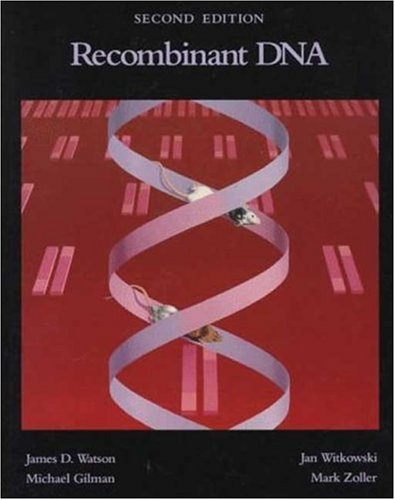
Recombinant DNA by Watson, Gilman, Witkowski, and Zoller is a classic textbook on genetic engineering. It covers the fundamental techniques, experimental strategies, and real-world applications of recombinant DNA technology. This book is ideal for students and researchers seeking a comprehensive, authoritative resource on molecular biology methods and their scientific context.
This book is not available
Store  |
Condition |
Deals & Coupons | Price |
Est. Shipping |
Total |
Buy |
|---|---|---|---|---|---|---|
| Sorry we could not find any result for “9780716722823” | ||||||
About Recombinant DNA
Recombinant DNA, co-authored by James D. Watson and colleagues, is a definitive textbook on the principles and practices of genetic engineering. It provides a detailed exploration of the molecular biology techniques that underpin recombinant DNA technology, from restriction enzymes and cloning vectors to gene expression and genome editing. The book emphasizes experimental design and problem-solving, offering insights into how these methods are applied in research, medicine, and biotechnology. With clear explanations and historical context, it serves as both a foundational text for students and a reference for professionals. This edition reflects the rapid advancements in the field while maintaining a focus on the core concepts that have shaped modern molecular biology.
Who should read Recombinant DNA?
This book is essential for undergraduate and graduate students in molecular biology, genetics, and biotechnology. It is also valuable for researchers and professionals in academia and industry who need a solid understanding of recombinant DNA techniques. Instructors will find it a useful teaching resource, and anyone with a background in biology seeking to deepen their knowledge of genetic engineering will benefit from its comprehensive coverage.
Pros & Cons
Pros
- ✓ Authoritative content from a Nobel laureate and experts in the field
- ✓ Comprehensive coverage of recombinant DNA principles and techniques
- ✓ Clear explanations of complex concepts with helpful illustrations
- ✓ Historical context that enriches understanding of the field's development
- ✓ Practical focus on experimental design and applications
Cons
- ✗ Some content may be outdated compared to the latest research
- ✗ Dense text might be challenging for beginners without a strong biology background
- ✗ Limited coverage of very recent technologies like CRISPR
- ✗ Lacks accompanying online resources or interactive elements
- ✗ Price may be high for students on a budget
Similar books


Frequently asked questions
Is this book suitable for self-study?
Yes, it is written with clear explanations and includes problems, making it suitable for self-study, though a basic background in biology is recommended.
Does this edition cover CRISPR technology?
This edition predates the CRISPR revolution, so it does not cover CRISPR in detail, but it provides foundational knowledge essential for understanding newer technologies.
What is the level of the book?
It is aimed at advanced undergraduates, graduate students, and professionals in molecular biology and related fields.
Are there exercises or problems in the book?
Yes, the book includes problems and questions to reinforce understanding and encourage critical thinking.
Is this book still relevant given recent advances?
While some techniques have evolved, the fundamental principles and concepts remain highly relevant and provide a solid foundation for modern molecular biology.
At Windsorbooks, we compare prices from trusted sellers so you can buy, rent, or sell textbooks at the best total price — shipping included.
As an Amazon Associate, Windsorbooks.com may earn a small commission on qualifying purchases.