
 Wishlist
Book Summary
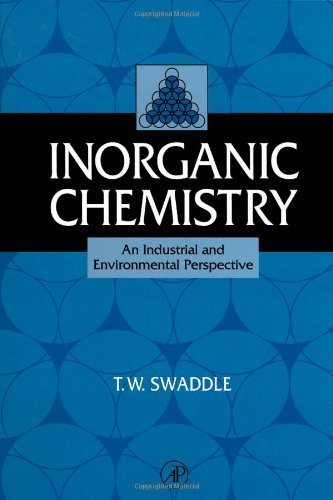
This textbook by Thomas W. Swaddle provides a rigorous yet accessible treatment of inorganic chemistry with a strong industrial perspective. It covers bonding, coordination chemistry, solid-state materials, and industrial processes like catalysis and metallurgy. Ideal for chemistry undergraduates and professionals seeking to connect fundamental principles to real-world applications in manufacturing, energy, and materials science.
This book is not available
Store  |
Condition |
Deals & Coupons | Price |
Est. Shipping |
Total |
Buy |
|---|---|---|---|---|---|---|
| Sorry we could not find any result for “9780126785500” | ||||||
About Inorganic Chemistry: An Industrial...
Inorganic Chemistry: An Industrial Perspective by Thomas W. Swaddle bridges the gap between academic inorganic chemistry and its practical applications in industry. The book begins with core topics such as atomic structure, bonding, and coordination chemistry, then moves into solid-state chemistry, materials science, and industrial processes including catalysis, metallurgy, and the production of inorganic chemicals. Swaddle emphasizes how fundamental principles inform the design and optimization of industrial reactions, making the material relevant to real-world problem-solving. The text includes worked examples, end-of-chapter problems, and case studies that illustrate the role of inorganic chemistry in sectors like energy, environmental protection, and advanced materials. This approach helps students and professionals understand both the theory and the economic and environmental considerations that shape industrial practice. The book is suitable for upper-level undergraduate and graduate courses, as well as for chemists working in industry who need a refresher on the industrial context of inorganic chemistry.
Who should read Inorganic Chemistry: An Industrial...?
This book is intended for undergraduate and graduate students in chemistry, chemical engineering, and materials science who want to understand how inorganic chemistry is applied in industry. It is also valuable for professionals working in chemical manufacturing, catalysis, metallurgy, or materials development who need a solid grounding in the industrial relevance of inorganic principles. Instructors teaching courses with an applied focus will find it a useful resource, as will researchers seeking to connect fundamental inorganic chemistry to practical processes and economic considerations.
Pros & Cons
Pros
- ✓ Strong integration of fundamental inorganic chemistry with industrial applications
- ✓ Clear explanations of complex topics such as bonding, coordination chemistry, and solid-state materials
- ✓ Includes worked examples and end-of-chapter problems that reinforce learning
- ✓ Case studies illustrate real-world industrial processes and problem-solving
- ✓ Suitable for both students and professionals seeking applied knowledge
Cons
- ✗ Some readers may find the industrial focus less relevant for purely theoretical coursework
- ✗ The depth of coverage in certain advanced topics may be limited for specialists
- ✗ Assumes a solid foundation in general chemistry, which may challenge beginners
- ✗ Lacks a dedicated solutions manual for all problems, requiring extra effort for self-study
- ✗ The book may feel dated in some industrial examples, as newer technologies are not covered
Similar books


Frequently asked questions
Is this book suitable for self-study?
Yes, the book includes worked examples and end-of-chapter problems that support self-study, though a background in general chemistry is recommended.
Does it cover both theoretical and applied aspects?
Yes, it balances fundamental principles with industrial applications, making it useful for both academic and professional readers.
What level is this book aimed at?
It is aimed at upper-level undergraduate and graduate students, as well as professionals in chemistry and related fields.
Are there case studies or real-world examples?
Yes, the book includes case studies and examples from industrial processes such as catalysis, metallurgy, and materials production.
Is a solutions manual available?
The book does not include a comprehensive solutions manual, so instructors or readers may need to work through problems independently.
At Windsorbooks, we compare prices from trusted sellers so you can buy, rent, or sell textbooks at the best total price — shipping included.
As an Amazon Associate, Windsorbooks.com may earn a small commission on qualifying purchases.