
 Wishlist
Book Summary
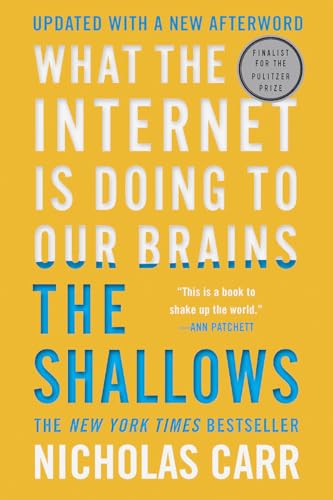
The Shallows by Nicholas Carr explores how the internet is reshaping our brains and diminishing our capacity for deep reading and sustained attention. Drawing on neuroscience, history, and cultural criticism, Carr argues that the web's distractions and hyperlinks fragment focus, making us more superficial thinkers. This provocative book is essential for anyone concerned about technology's impact on cognition and literacy.
This book is not available
Store  |
Condition |
Deals & Coupons | Price |
Est. Shipping |
Total |
Buy |
|---|---|---|---|---|---|---|
| Sorry we could not find any result for “9780393357820” | ||||||
About The Shallows: What the Internet Is...
In The Shallows, Nicholas Carr investigates how the internet is altering the way we think, read, and remember. He traces the history of human attention from oral culture to the printing press, showing how each medium reshapes the brain. Carr then draws on neuroscience to explain neuroplasticity—the brain's ability to rewire itself—and argues that the web's constant distractions, hyperlinks, and notifications train us for skimming rather than deep thought. He warns that this shift weakens our capacity for concentration, reflection, and empathy, with consequences for education, creativity, and culture. Blending personal anecdote with rigorous research, Carr makes a compelling case that we are becoming 'shallower' thinkers, and he urges readers to reclaim focused attention in a digital age.
Who should read The Shallows: What the Internet Is...?
This book is ideal for educators, parents, students, and anyone who spends significant time online and feels their attention span slipping. It appeals to readers interested in neuroscience, media studies, and cultural criticism. Policymakers and tech designers will also benefit from Carr's insights into how digital environments shape cognition. If you've ever wondered why deep reading feels harder than it used to, this book offers a thoughtful, evidence-based explanation.
Pros & Cons
Pros
- ✓ Accessible and engaging writing that blends personal narrative with scientific research
- ✓ Provides a clear historical context for how media technologies shape human thought
- ✓ Offers compelling neuroscientific evidence about neuroplasticity and attention
- ✓ Raises important questions about the costs of constant connectivity
- ✓ Includes practical implications for education, parenting, and personal habits
Cons
- ✗ Some critics argue Carr romanticizes pre-internet reading culture
- ✗ The book's pessimistic tone may feel alarmist to some readers
- ✗ Limited discussion of potential benefits of digital media for cognition
- ✗ Neuroscientific evidence is sometimes oversimplified for a general audience
- ✗ Lacks concrete, actionable solutions beyond individual willpower
Similar books


Frequently asked questions
What is the main argument of The Shallows?
Carr argues that the internet is rewiring our brains to favor skimming and multitasking over deep, focused thought, diminishing our capacity for sustained attention and reflection.
Is The Shallows based on scientific research?
Yes, Carr draws on neuroscience studies about neuroplasticity, as well as historical and cultural analysis, to support his claims about how media shape cognition.
Who is Nicholas Carr?
Nicholas Carr is a journalist and author known for writing about technology, business, and culture. His other books include The Glass Cage and Utopia Is Creepy.
Does the book offer solutions to digital distraction?
While primarily diagnostic, Carr suggests that individuals can reclaim attention through mindful practices, and he implies that society should reconsider its embrace of constant connectivity.
Is The Shallows still relevant today?
Yes, its arguments about attention fragmentation are even more pertinent in the age of smartphones, social media, and endless scrolling.
At Windsorbooks, we compare prices from trusted sellers so you can buy, rent, or sell textbooks at the best total price — shipping included.
As an Amazon Associate, Windsorbooks.com may earn a small commission on qualifying purchases.