
 Wishlist
Book Summary
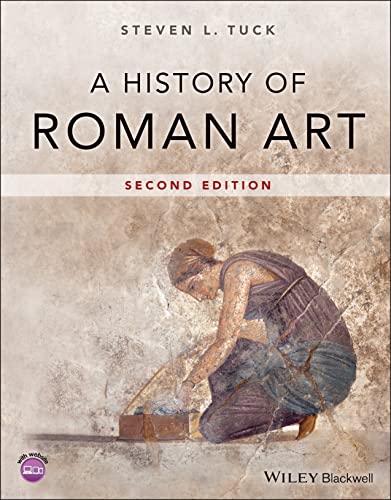
A History of Roman Art by Steven L. Tuck is a comprehensive textbook that surveys Roman art and architecture from the Republic to Late Antiquity. It integrates social, political, and cultural contexts, helping students understand how art functioned in Roman society. With clear explanations and rich illustrations, it is an essential resource for undergraduate and graduate courses in art history, classics, and archaeology.
This book is not available
Store  |
Condition |
Deals & Coupons | Price |
Est. Shipping |
Total |
Buy |
|---|---|---|---|---|---|---|
| Sorry we could not find any result for “9781119653288” | ||||||
About A History of Roman Art
A History of Roman Art offers a chronological and thematic exploration of Roman artistic production, from the founding of the Republic through the reign of Constantine. Steven L. Tuck examines architecture, sculpture, painting, and decorative arts, placing each within its historical, social, and political context. The book emphasizes how art communicated power, identity, and civic values across the empire. Richly illustrated with maps, plans, and color images, it provides students with the visual and analytical tools to interpret Roman material culture. Tuck also addresses methodological issues and current debates in the field, making the text both accessible and intellectually rigorous. This textbook is designed for courses in Roman art, classical studies, and archaeology, and serves as a valuable reference for anyone interested in the visual culture of ancient Rome.
Who should read A History of Roman Art?
This book is ideal for undergraduate and graduate students taking courses in Roman art, classical archaeology, ancient history, or visual culture. It also suits instructors seeking a well-structured, up-to-date textbook for their curriculum. Additionally, general readers with a serious interest in ancient Rome, museum professionals, and travelers to Roman sites will find it informative and accessible. No prior specialized knowledge is required, though some familiarity with ancient history is helpful.
Pros & Cons
Pros
- ✓ Comprehensive coverage from the Republic to Late Antiquity
- ✓ Integrates art within social and political contexts
- ✓ Richly illustrated with high-quality images and maps
- ✓ Clear, engaging writing suitable for students
- ✓ Addresses current methodological debates in the field
Cons
- ✗ May be too detailed for casual readers
- ✗ Limited focus on some regional artistic traditions
- ✗ Assumes basic knowledge of Roman history
- ✗ Price may be high for some students
- ✗ Some chapters may feel dense for beginners
Similar books


Frequently asked questions
Is this book suitable for beginners?
Yes, it is written for students and assumes no prior expertise in art history, though basic familiarity with Roman history is helpful.
Does it cover both architecture and fine arts?
Yes, it covers architecture, sculpture, painting, mosaics, and decorative arts across the Roman world.
Is the book up to date with current scholarship?
Yes, it incorporates recent research and methodological debates, making it a current and reliable resource.
Are there illustrations and maps?
The book is richly illustrated with color plates, maps, and plans to support the text.
Is it appropriate for a college course?
Yes, it is designed as a textbook for undergraduate and graduate courses in Roman art and archaeology.
At Windsorbooks, we compare prices from trusted sellers so you can buy, rent, or sell textbooks at the best total price — shipping included.
As an Amazon Associate, Windsorbooks.com may earn a small commission on qualifying purchases.