
 Wishlist
Book Summary
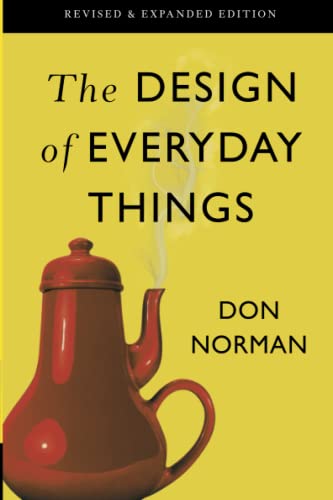
Don Norman's The Design of Everyday Things is a foundational text on human-centered design. It explains why some products frustrate users while others feel intuitive, introducing concepts like affordances, signifiers, and feedback. This revised edition updates classic examples for the digital age, making it essential reading for designers, engineers, and anyone curious about the psychology behind the objects we use daily.
This book is not available
Store  |
Condition |
Deals & Coupons | Price |
Est. Shipping |
Total |
Buy |
|---|---|---|---|---|---|---|
| Sorry we could not find any result for “9780465050659” | ||||||
About The Design of Everyday Things:...
The Design of Everyday Things is a classic exploration of why good design matters and how it shapes our interactions with the world. Don Norman, a cognitive scientist and design theorist, explains that when we struggle with doors, stoves, or smartphones, the fault usually lies in design, not the user. He introduces core principles such as affordances, signifiers, mapping, feedback, and constraints, showing how these elements guide intuitive use. The revised edition expands on digital interfaces, human error, and the design of complex systems. Through vivid examples and clear prose, Norman advocates for human-centered design that prioritizes discoverability and understanding. This book is both a critique of thoughtless design and a practical guide for creating products that are safe, effective, and enjoyable to use.
Who should read The Design of Everyday Things:...?
This book is essential for product designers, UX/UI professionals, engineers, and architects who want to create intuitive and user-friendly products. It is also valuable for students of design, psychology, and human-computer interaction, as well as managers and entrepreneurs seeking to understand the principles behind successful products. Anyone frustrated by poorly designed everyday objects will find insight and practical wisdom here, making it accessible to general readers interested in the psychology of design.
Pros & Cons
Pros
- ✓ Clear, engaging writing that makes complex ideas accessible
- ✓ Foundational principles applicable across physical and digital design
- ✓ Updated examples relevant to modern technology and interfaces
- ✓ Practical guidance for improving design processes
- ✓ Thought-provoking insights into human psychology and error
Cons
- ✗ Some examples feel dated despite revisions
- ✗ Repetitive in places, with concepts revisited multiple times
- ✗ Lacks deep coverage of certain specialized design fields
- ✗ May be too theoretical for readers seeking hands-on techniques
- ✗ Occasional tangents slow the pace
Similar books


Frequently asked questions
Is this book suitable for beginners in design?
Yes, it is highly accessible and requires no prior design knowledge. Norman explains concepts clearly with relatable examples, making it an excellent starting point for anyone interested in design.
Does this edition include digital design examples?
Yes, the revised edition incorporates many digital and interface examples, such as smartphones and software, while retaining classic physical product examples.
Is this book only for professional designers?
No, it is written for a broad audience. While designers benefit greatly, anyone who uses everyday objects—which is everyone—can gain valuable insights into why some things work well and others don't.
What are the key concepts covered in the book?
The book covers affordances, signifiers, mapping, feedback, constraints, human error, and human-centered design. These principles help explain how to make products intuitive and enjoyable to use.
How does this book compare to other design books?
It is considered a foundational text in design literature, often cited as a must-read. Its focus on psychology and everyday examples sets it apart from more technical or specialized design manuals.
At Windsorbooks, we compare prices from trusted sellers so you can buy, rent, or sell textbooks at the best total price — shipping included.
As an Amazon Associate, Windsorbooks.com may earn a small commission on qualifying purchases.